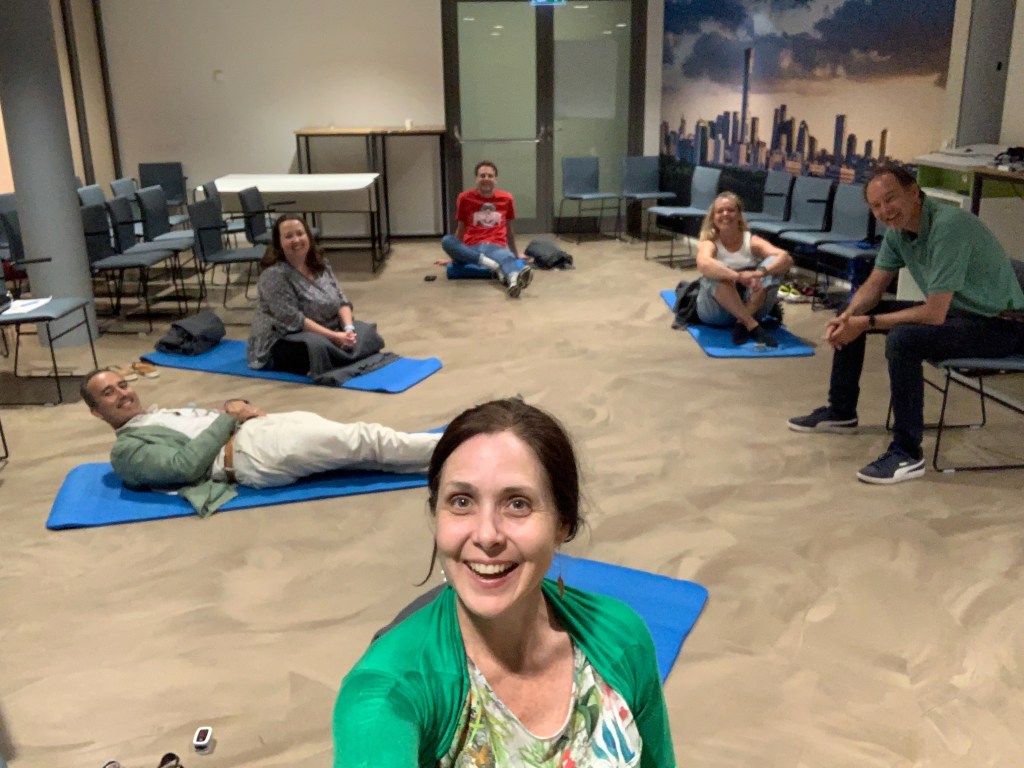
Breathing is something that we all do every single minute of every single day – and yet, I feel I do not do it well. Over the years, I’ve tried various methods and techniques to improve this via doctors, yoga, physio, logopedie and more. This is the first time I’ve spent several hours on it specifically though, and am thankful to my work (International Business programme at The Hague University of Applied Sciences) who offered us this chance on 19 June 2023.
Our instructor was Fedor von Balluseck, and I’d highly recommend him. He’s patient and knowledgeable.

Here are some of my own notes:

Breathing is both a subconscious AND conscious activity.
As we are all lecturers, our trainer made the interesting observation that the very nature of our job – being one lecturer in front of up to 30 students vs you – can be interpreted by the body, if not the mind, as hostile. This can affect your breathing.
We talked about the technical side of breathing, for example through the nose verses the mouth.

This is the first time I’ve had so much focus on the CO2 levels and tolerance which was fascinating. I’d never looked into this before.
We timed our breathing and drew this chart of the number of breaths we took in a minute – but also discussed that it’s almost impossible to track your breathing and not influence it.
We calculated our BOLT score.
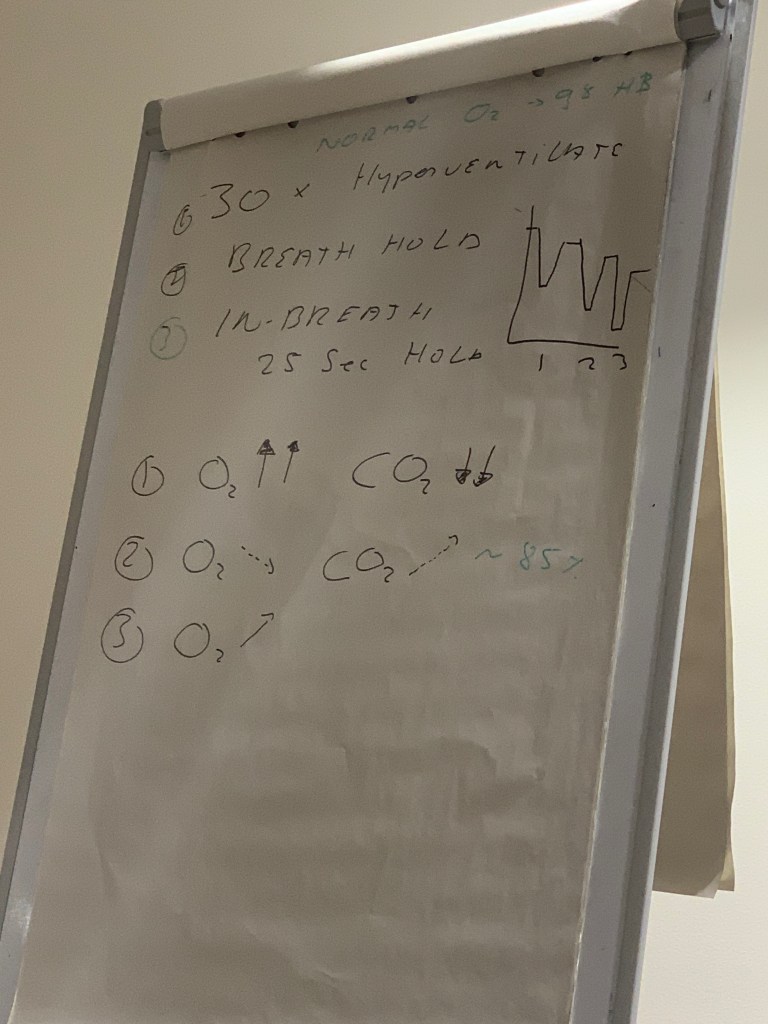

Walking up and down in a corridor, we experimented with how long it was in between breaths – comfortably – and tried to see if we could extend this a little.
Yawning can mean you are low on CO2.
I get cold hands and feet a lot and this can be related to the CO2 levels.
Overall, even when typing these notes, I have trouble getting my head around it all. Thankfully we were given a book to keep with information we can refer back to.
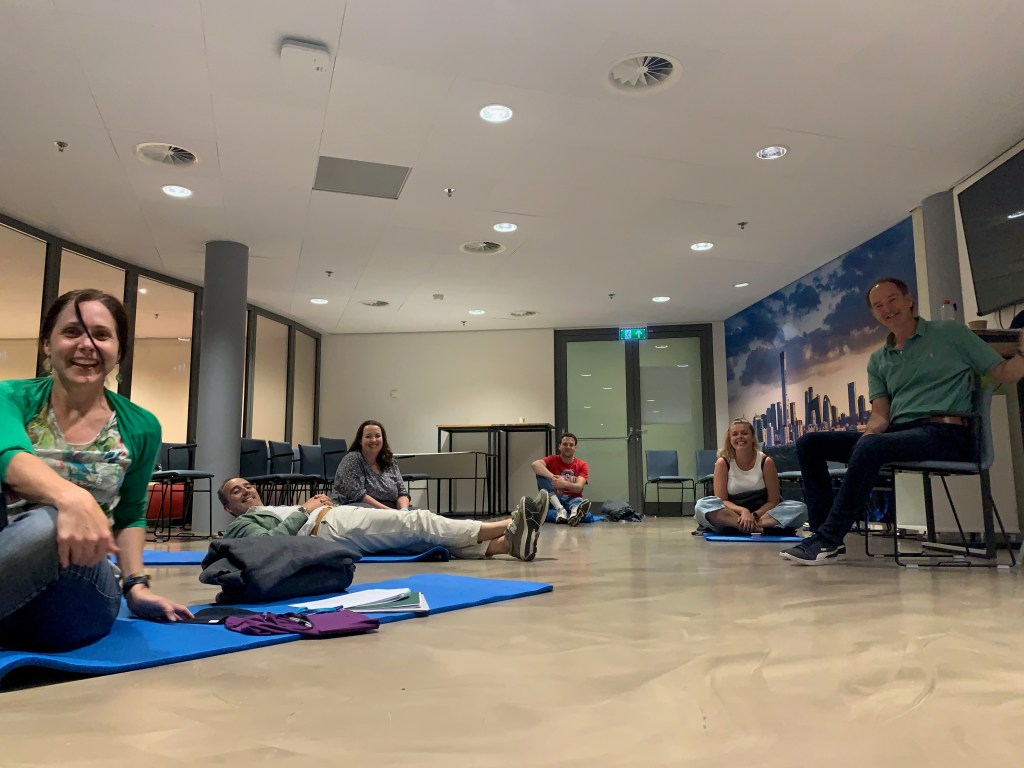
To end the day we did an exercise based on the Wim Hof Method. Sharing this photo with permission from the group:
Taping your mouth shut at night can help you learn to only breathe through your nose and get a better nights’ sleep. Not sure that will work for me as the feeling of it makes me anxious but something I can practice in small bursts first.

Personally, l have some major “blocks” when it comes to even thinking or talking about breathing. Even after many years of exploring this, I’m not sure where this comes from. It could be related to the fact I’ve previously had an internal nose operation (that didn’t seem to go well), am neurodiverse, asthmatic, highly allergic to cigarette smoke (which I find I’m exposed to relatively regularly here in The Netherlands even when trying to avoid it)….I really don’t know. I’ve dealt with anxiety and even panic attacks from time to time over the years, and so often I’m told by others to “Breathe”. Of course I know this, but it’s like being told to do this makes it worse somehow. Learning how to breathe better though is such a crucial thing to all areas of my life though so even small steps to improve my breathing are worthwhile, so I’m grateful for this opportunity to have done this course. I’m also proud that I decided to dedicate the time, and keep trying – even though it’s a tough topic for me to tackle.
We will have an online follow up session later this year, and also downloaded a recommended app to try – the Oxygen Advantage:

 Zestee